BENET’S COMMITMENTS TO LISLE AND OUR NEIGHBORS
Benet has prioritized meeting with the community and incorporating their feedback into the design of the improvement plans throughout the planning process.
From these discussions, Benet has incorporated several commitments over and above Village Code requirements to ensure the campus improvement takes everyone’s interests into consideration:
Enhanced Studies & Due Diligence:
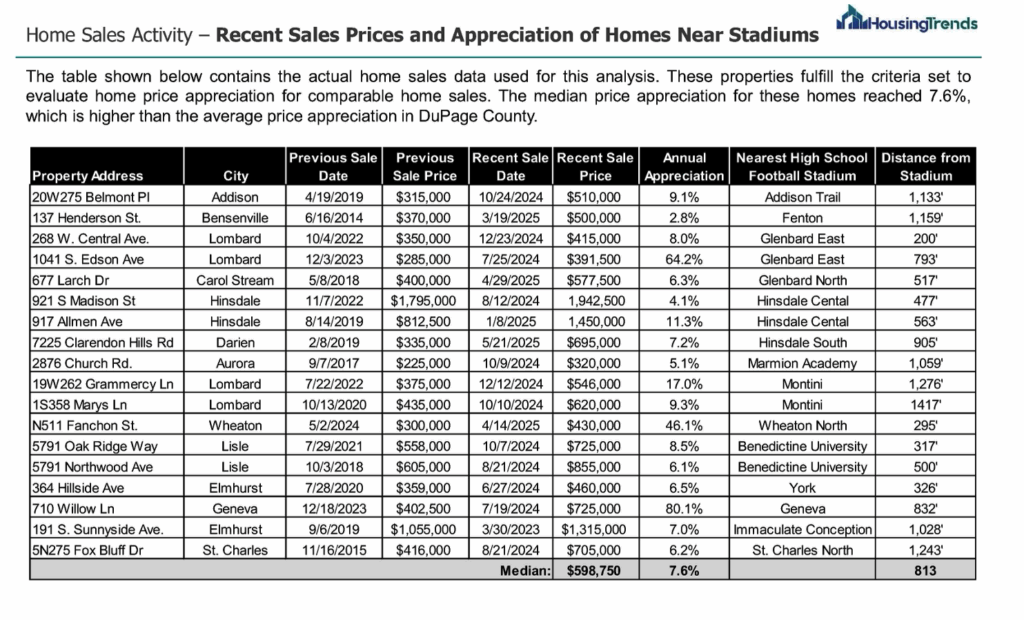
- Benet commissioned a Housing Expert (Housing Trends, LLC) to perform a housing market analysis to confirm that the improvement project will not diminish neighboring property values based on a review of similar High School sporting facilities across the region.
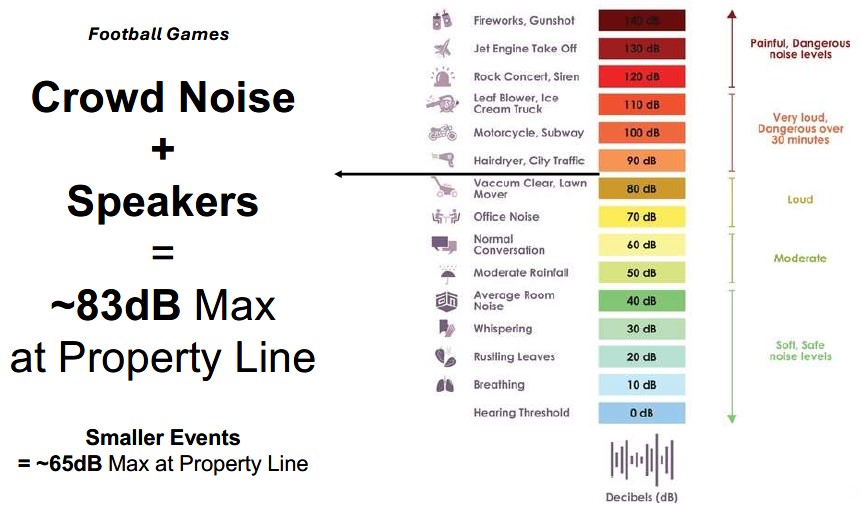
- Despite being exempt from the Village’s sound ordinance, Benet commissioned a sound study to ensure the system was appropriately designed and to determine the anticipated sound levels at the property line. Benet will conduct follow up testing upon installation of the sound system to confirm the sound projected is as designed.
Design Modifications At The Request of Neighbors:
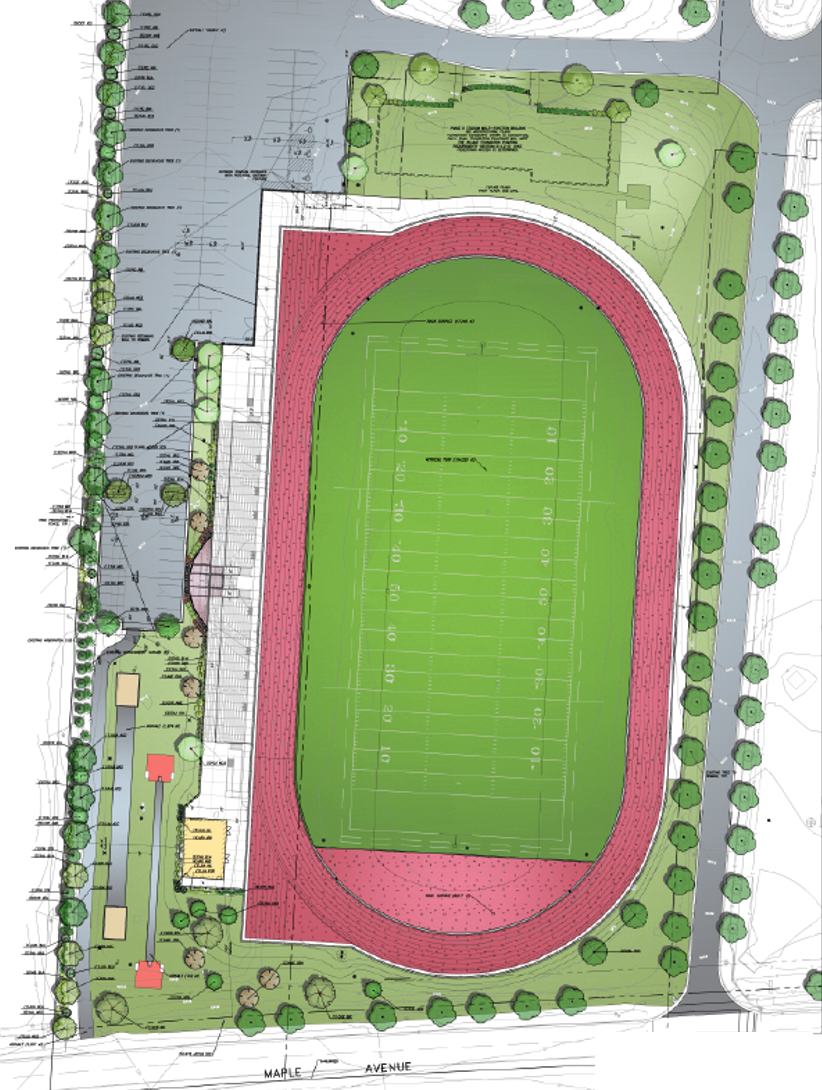
- NEW: Shifted the stadium east to preserve a 100-foot setback between the back of the bleachers and the west property line
- NEW: Removed the alumni plaza from behind the bleachers to eliminate an additional gathering area proximate to the west property line
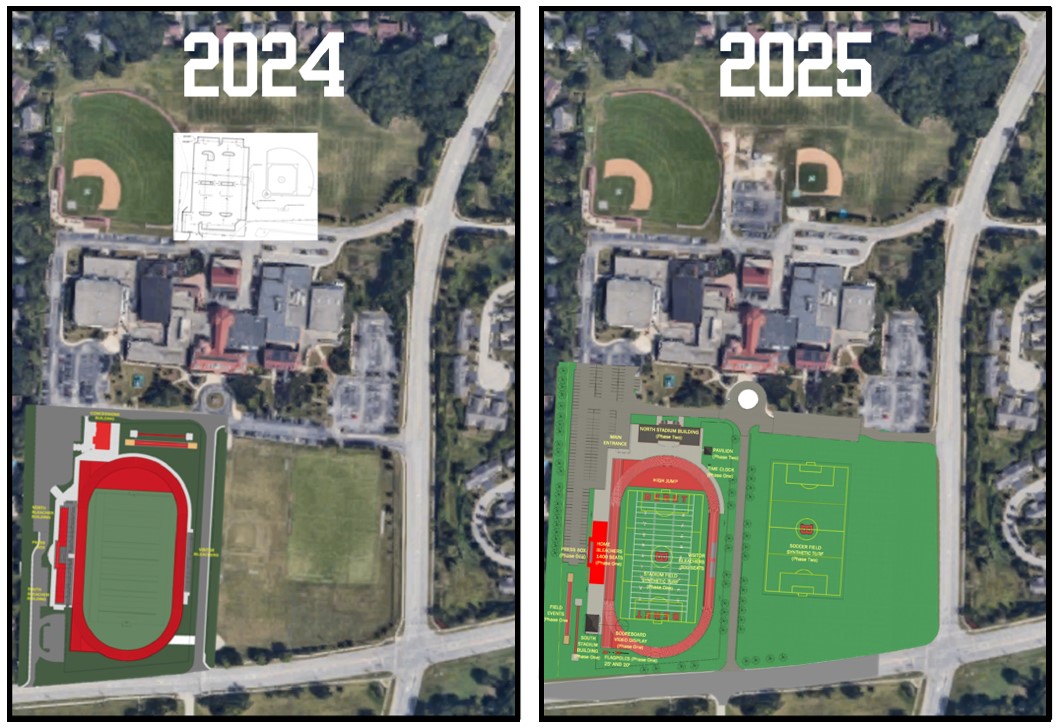
- Reduced the seating capacity by 785 seats, size, and scale of the stadium from the 2024 plan
- Since Plan Commission, we have further reduced the home bleacher capacity from 2,000 seats to 1,400 seats
- Decreased the overall height of the bleachers
- Enhanced the landscaping buffer along the west property line
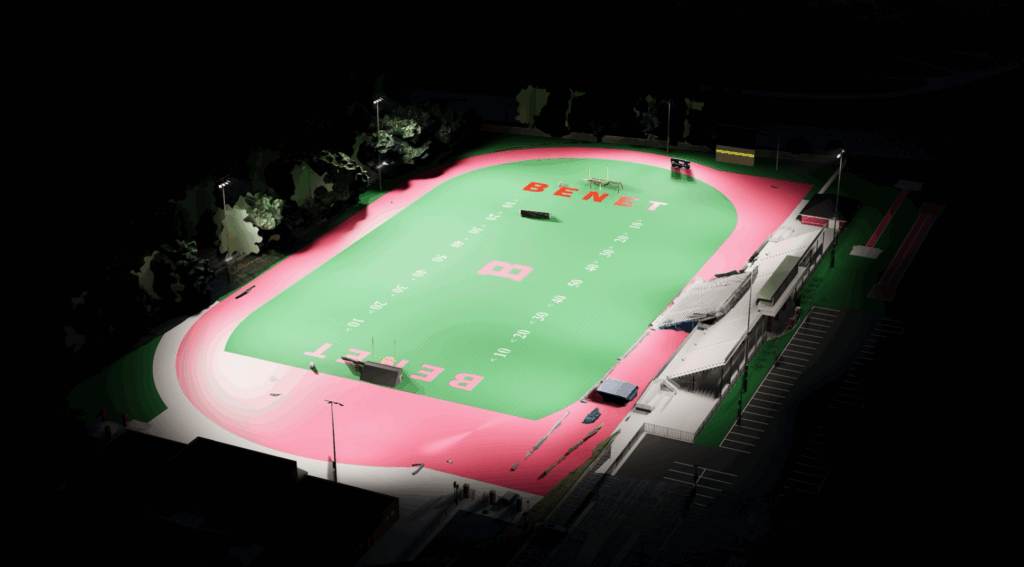
- Removed RBG lighting components from the stadium lighting system
- Relocated the location of proposed light poles from the initial layout
- The proposed expansion of the north parking lot was removed from the design
- Replacing existing 28-foot parking light poles with 20-foot light poles equipped with newer technology along the west property line
- Eliminated the proposed new vehicle exit onto Maple Avenue
- The location of structures in the stadium were reconfigured
- Agreed to amend the Planned Unit Development (PUD) terms to remove the allowance of 3 footcandles at the property line and comply with current Village Code requirement of .1 footcandles at property line
- Reduced size of scoreboard
Operational Commitments To Neighbors:
Additional Commitments:
- Benet has agreed to install a sound monitoring system to monitor noise levels generated by the stadium
- Usage of stadium lights are limited to 54 days a year (except for maintenance purposes)
- Stadium lights are not permitted on any Sunday or during the months of December, January, February, June, or July
- Benet has agreed to specific dimming and shut-off times for the stadium lights
- Benet has agreed to coordinate with Lisle Police Department to ensure adequate presence at events, as applicable
- Benet developed a Traffic Management Plan to address traffic control, the utilization of Lisle Police for football games, designated pick-up and drop-off areas, management of neighborhood parking, and ongoing communication and coordination with the Benet community regarding event traffic and parking
- Benet developed a Training and Compliance Manual as it relates to stadium operations pertaining to the sound system a stadium lighting
Previous Commitments:
- Adjusted event schedules to anticipate all athletic competitions concluding by 10 p.m., including a commitment to move up the start time of freshman and varsity football games.
- A lighting mitigation plan will be implemented to require dimming of stadium lights as events end, and plans to turn off stadium lights as soon as possible after events end.
- The stadium, athletic fields, and track will be used for Benet-sponsored or affiliated events, and the school will not rent the facility to other operators or for commercial purposes.
- To ensure adequate parking, Benet will manage its campus schedule to avoid scheduling multiple significant events, such as a musical, on the same day as a football game.
- Benet is retrofitting existing parking lot lights with visors to further mitigate the impact of its safety lighting in the area.
- Continued notification to parents, students, and visitors of a prohibition from parking on Cascade Drive and encouraging them to use designated parking areas.
- Created a “Free Pass” which will provide Oak Hill and Oak Hill South residents with complimentary passes to enjoy all competitions and events held at the campus at no charge.
10 Essential Questions Answered Through Plan Commission Process
As detailed above, Benet has made numerous revisions throughout the design phase of the proposed athletic fields and has made a series of commitments to Lisle and its neighbors.
Throughout the design and Village review process, Benet has engaged with neighbors and the community and has made changes to its proposal and design plans.
Benet held multiple group and one-on-one informal listening sessions with neighbors before the formal Plan Commission process began. The Plan Commission held over 20 hours of public hearings on the proposal and voted 6-1 to recommend approval of the project.
It is important to note that the athletic fields and track are essential to the operations of the school for physical education, performing arts, sports, and other activities that enrich the student experience.
Benet has listened to its neighbors and made commitments governing how it will use the stadium. Benet voluntarily proposed adjusting the start of freshman football games to 4:30 p.m. and moving up the kickoff of varsity football to 7 p.m. to reasonably conclude the events by 10 p.m. during the football season.
No more than a maximum of six (6) night home football games are anticipated in any given year. It is expected that all other events, such as lacrosse, soccer, and track would conclude by 9 p.m., with the lighting turned off as quickly as possible.
Benet is committed to providing an environment where all its students can achieve their potential. This improvement plan benefits every Benet student and every student-athlete from the area who comes to Lisle to compete. The facilities are being designed to use playing surfaces that reduce the likelihood of injuries.
Every student will benefit from the improved facilities for physical education. For athletics, the renovated athletic fields will host various men’s and women’s sports, including cross-country, soccer, track, lacrosse, and football. The multi-field playing surface is wide enough to accommodate multiple sports, and activities, such as the marching band and performing arts. This ensures that both men’s and women’s teams have access to safer playing surfaces and to lighting as needed.

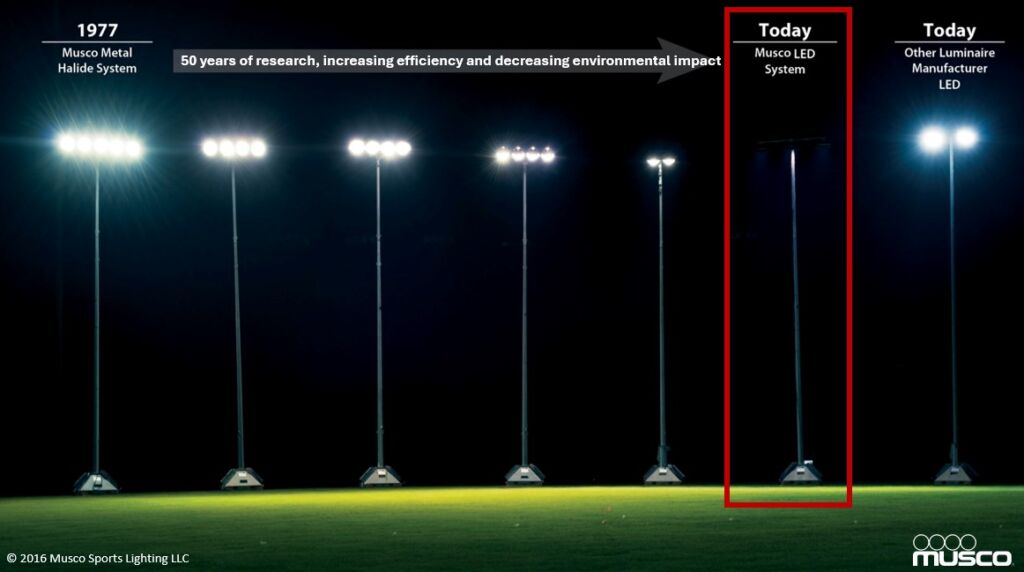
While the existing stadium was built in 1961, it does not have a lighting system. Recognizing the concern, Benet hired Musco to design a best-in-class system that deploys the latest available technology to increase LED system efficiency and reduce environmental and neighbor impacts.
Musco has developed 50 years of research and innovation into producing systems that are far superior to previously deployed technology. Musco’s Total Light Control (TLC) makes the system better for athletes, neighbors, and the night sky.
The lighting system has been designed to focus on illuminating the field, not illuminating non-playing surfaces. The result is a hyper-focused, appropriately angled system that mitigates the off-site impacts.
Additionally, Benet has proposed, as part of its operational plans, to dim the stadium lighting system after competitions end, allowing guests and athletes to leave the facility safely while minimizing impact to the surrounding area.
To address this concern, Benet hired Housing Trends LLC to perform a housing market analysis to provide the Plan Commission, Village Trustees, and the community with recent market data to make an informed decision.
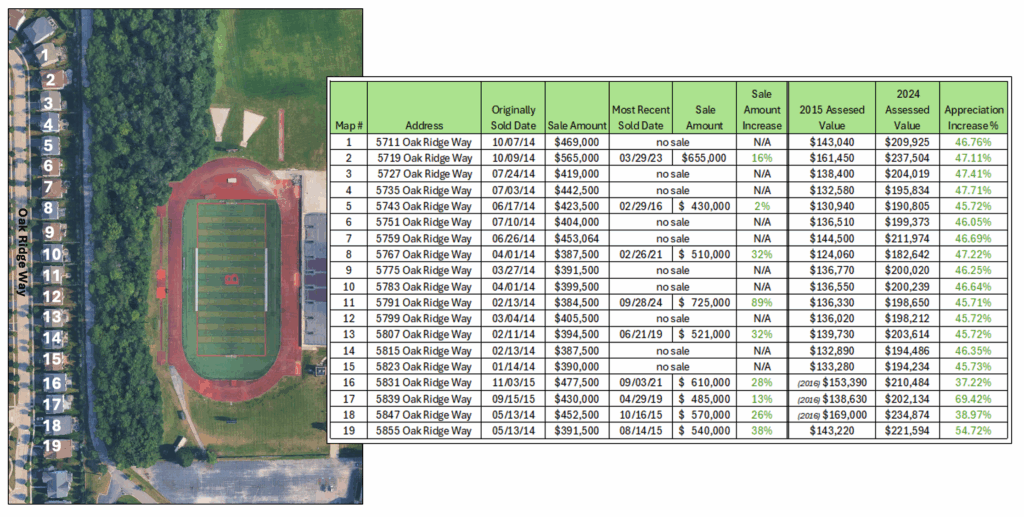
Specifically in Lisle, the study analyzed the homes adjacent to Benedictine University’s stadium in Arbor Trails. Every home that sold appreciated, and based on the 2024 assessed value, properties have increased by 37% to 55% since the initial sale. Like the adjacent subdivision to Benet, every home in Arbor Trails was built after the stadium was constructed.
The study concluded that proximity to a high school stadium in the region did not negatively affect recent home sales. The 7.6% annualized appreciation of the homes included in the study was higher than the average price appreciation in DuPage County.
Benet commissioned a comprehensive sound study to ensure the system was appropriately designed and to determine the anticipated sound levels at the property line.
Using the equipment specifications and locations as designed for the public address audio system, along with the layout of the proposed stadium, the sound study concluded that peak noise from a large event would be ~83dB at the property line. In comparison, smaller events would likely produce a maximum of ~65dB at the property line.
The sound study was peer-reviewed by the Village’s third-party consultant.
Benet has also proposed installing a limiter on its public address system to ensure the volume cannot exceed the limits established in the sound study and planning process, and is working with Village staff relative to follow up testing once the system is installed.
Benet agreed to install a sound monitoring system to confirm compliance with the commitments and representations made during the zoning and approval process.
As part of the diligence and review process, a parking study was completed. The parking study analyzed Benet’s peak parking demand for an event with maximum attendance.
The study concluded that Benet will meet all code requirements and has enough parking to accommodate events held at the renovated athletic fields and school operations.
In addition to the required parking, Benet also has overflow parking mitigation plans that ensure that all guests and visitors can safely and responsibly park, which include overflow parking areas on the north side of campus, south side of campus, and a parking license on Benedictine University’s lot south of Maple Avenue.
There are several reasons why Benet has proposed renovating its existing stadium. From a safety perspective, locating a stadium and track adjacent to two major arterial roads is atypical for this type of facility and counter productive to safety objections. Building on the corner would introduce additional pedestrians circulating the stadium closer to this busy intersection, rather than internal to the Benet property. The safest option is to keep the stadium where it has been located since 1961.
The primary reason the school has not proposed locating the stadium along the eastern boundary is that the property is subject to a legal covenant that prohibits certain construction in that location. Benet cannot propose a facility in a location where it does not have the legal right to build.
Secondly, Village professional staff has also indicated they would not support location at the northwest corner of Yackley Avenue and Maple Avenue for both safety and vehicular circulation reasons.
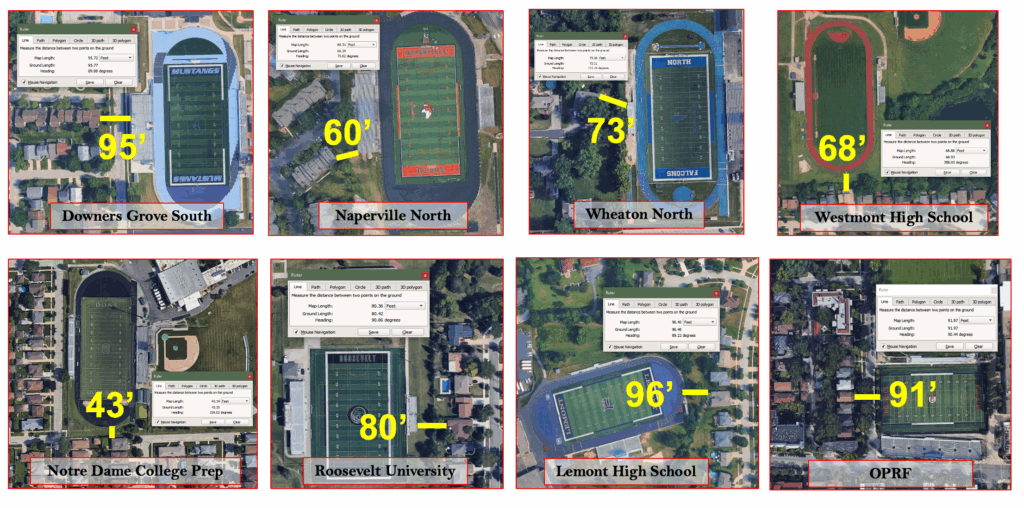
Under the Village’s existing codes and regulations, the minimum setback required is 10 feet. As proposed, there would be 146 feet of separation between the nearest residence and the nearest structure of the renovated athletic fields, which is the press box. Because of the campus entrance drive and the required width of the multi-sport playing surface, the 146-foot separation is the maximum setback achievable.
With the recent changes, there is a 100 foot separation between the back of the bleachers and the property line of adjacent neighbors to the west.
In addition to far exceeding the required setback, Benet has incorporated additional landscaping along its property line to create an attractive visual separation between the school and residential properties to the west.
The 146-foot buffer from structure to structure is also more than that of many other high schools across the region:
- Notre Dame College Prep – 43 feet
- Naperville North – 60 feet
- Westmont High School – 68 feet
- Wheaton North – 73 feet
Benet has proposed to plant 196 trees and shrubs, in addition to retaining the existing trees, along its property line. There will be a total of 26 canopy trees, 32 evergreen trees, and 162 shrubs planted on the western perimeter buffer area. The proposed landscaping plan exceeds the requirements under the Village’s codes.
Overall, the landscaping and building materials used will create a significantly enhanced visual aesthetic for all neighbors and the community compared to the current conditions.